Posts

Showing posts with the label Nigerian Foreign Policy

Nigeria’s Stake in the Iran Nuclear Deal
Image
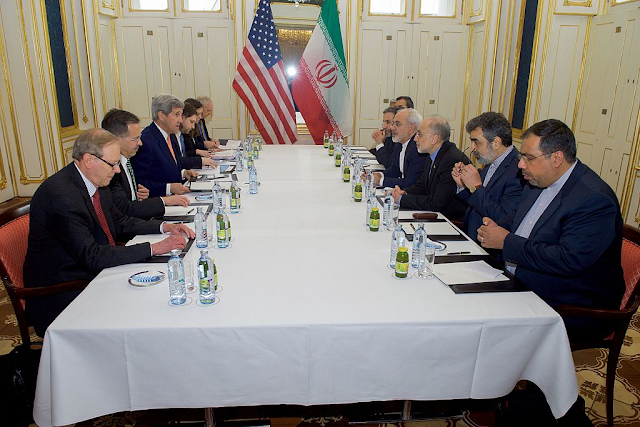
Abuja sees the Joint Comprehensive Plan of Action, better known as the Iran Nuclear Deal, as an abstract issue. However, there are at least two reasons why the debate over its survival matters. US Secretary of State John Kerry, Iranian Foreign Minister Javad Zarif, and their respective advisers sit across from one another on January 16, 2015, at the Palais Coburg Hotel in Vienna, Austria, at their last meeting about the implementation of the Joint Comprehensive Plan of Action outlining the shape of Iran's nuclear program. Image: State Department. US President Donald Trump’s decision to unilaterally withdraw from the Joint Comprehensive Plan of Action (JCPoA) – better known as the Iran Nuclear Deal – and reimpose full sanctions on Tehran has been widely condemned by countries around the world. Most surprising has been the unusually strident criticisms from the EU’s high officials. President of the European Council Donald Tusk condemned what he described as the US’ “capr...
Buhari In Washington: Five Things to Watch

Image
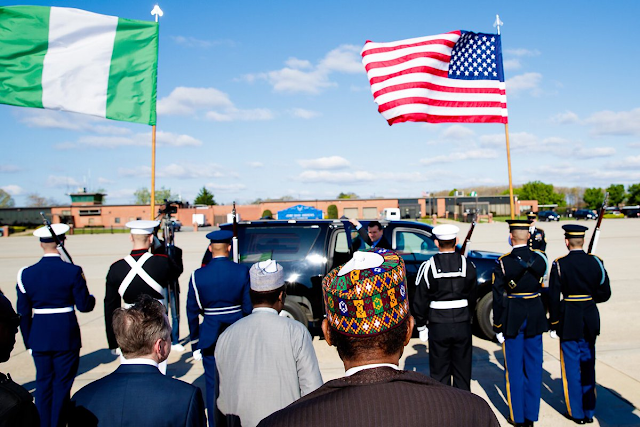
By Muktar Usman Muktari-Janguza | Geopolitical Analyst | Email: janguza.arewa@gmail.com | Twitter: @JanguzaArewa Buhari, at Joint Andrews Base, on his way to Blair House which will be his official accommodation during his 3-day working visit. Photo: Bayo Omoboriowo. 

Why Nigeria Should Think Twice Before Joining Saudi Arabia’s Islamic Military Alliance

Image
An abridged version of this article was published in ' Africa Arguments ' on 8 January 2016. Saudi Arabia’s Deputy Crown Prince and Defence Minister Mohammad bin Salman announcing the establishment of its anti-terror alliance at a rare press conference in Riyadh on December 15 2015. Photo Credit AFP On 15 December, Saudi Arabia made a surprising announcement as it unveiled to the world what it said will be a 34-state “ Islamic military alliance ” to combat terrorism “all over the Islamic world”. This ambitious initiative, said Deputy Crown Prince and Defence Minister Mohammed bin Salman, “emanates from the keenness of the Muslim world to fight this disease, which has harmed the Islamic world’s standing in the international community”. Little is known about how exactly this alliance will operate, but according to official statements it seems there will be a military component which includes intelligenc...

Why Nigeria Should Also Think of Itself as a Central African State

Image
This article was first published on ' African Arguments Online ' on 21 July 2015 President Muhammadu Buhari with the President of Chad, Idris Deby, during a Press Conference at the State House in N’djamena, Chad. 4 June 2015. Photo Credit: frontiersnews.com The ‘ concentric circle ‘ model which frames how Nigeria’s foreign policy thinkers view our region places the country exclusively in West Africa. Consequently West Africa has traditionally been the main focus of the country’s regional diplomacy. West Africa also remains the arena of Nigeria’s boldest and most celebrated diplomatic initiatives to date – the establishment of ECOWAS in 1975 and the ECOMOG interventions of the 1990s. I think this view of our broader region which situates Nigeria on the eastern edges of West Africa is incomplete. Instead our strategic thinkers should embrace the country’s natural identity as a potential pivotal power situated at a crossroad between multiple regions, and an a...

Nigeria and France: Geopolitical Rivals No More

Image
How accurate is the widespread perception that Nigeria and France remain locked in an adversarial rivalry in West Africa? President Muhammadu Buhari and President Francois Hollande meet on the sidelines of the G7 Summit in Schloss Elmau, Germany. Photo Credit: Getty Images/AFP. Reading Bassey and Dokubo’s monumental tome, Defence Policy of Nigeria: Capability and Context , one gets the impression that for Nigeria’s foreign policy elites France remains a formidable obstacle to the country’s regional ambition and an enduring threat to national security. As the authors observe:  The pervasive and tenacious involvement of France in West-Central Africa has been widely seen by Nigerian defence planners as constituting a direct affront to its national security and also impeding the growth of the country’s political, economic and cultural interests in the region. France’s politico-military presence all across West-Central Africa, the authors unequivocally conclude, means the...

What President Buhari can Learn from Prime Minister Modi’s Foreign Policy

Image
Prime Minister Modi’s first year in office has witnessed a remarkable reinvigoration of India’s foreign policy, with several bold initiatives taking observers by surprise. What can President Buhari learn from Prime Minister Modi's diplomatic outreach in his first year as he draws up his own foreign policy agenda? President Muhammadu Buhari and Prime Minister Narendra Modi on their respective Inauguration Day s Prime Minister Modi completed his first term on May 26, three days before President Buhari’s inauguration on May 29. While on the domestic front his one year in office is generally said to have achieved mixed results , his bold forays on the international front however “ surprised just about everyone ” and has been widely praised. He has reoriented India’s foreign policy, reinvigorated its regional diplomacy, and revitalised key partnerships – notably the Indo-US and Sino-Indian relationships.  Let’s take a look at one of Prime Minister Modi’s key diplomatic in...